14-Depot Steel Site Migration to Next.js
A practical breakdown of a B2B steel website migration covering depot structure, grade-first search, calculator UX, and RFQ flow.
Last updated: June 16, 2026
The useful part of this steel migration was not just moving pages into Next.js. The useful part was changing how a B2B buyer could understand stock, sections, grades, depot context, and quoting intent before talking to sales.
What actually changed
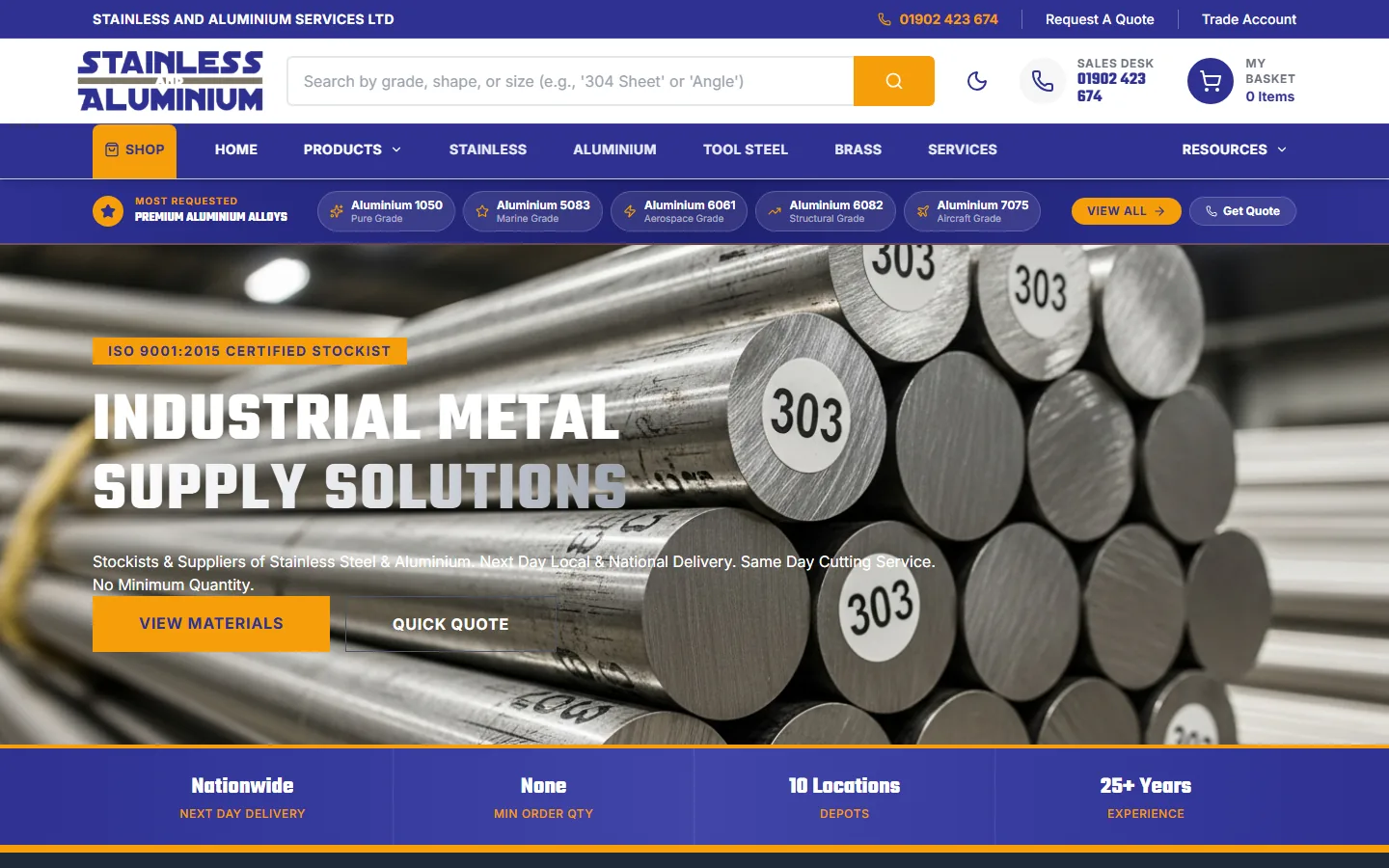
The project brief centered on a 14-depot steel operation. That meant the site could not behave like a flat brochure. Buyers needed a faster route from product intent to quote intent, especially when looking for structural steel, stainless, aluminium, and grade-specific sections.
The new structure prioritized grade-first navigation, clearer product categories, calculator-adjacent content, and RFQ paths that kept commercial intent visible. The point was to reduce the distance between a buyer thinking "I need this section" and the business receiving a usable inquiry.
The depot model changed the information architecture
A 14-depot footprint creates a different content problem from a one-location supplier. Depot context affects delivery confidence, availability expectations, and quote routing. The migration treated depot coverage as part of the buying journey instead of burying it as generic company information.
The practical change was to keep depot, category, and RFQ context close together. That gave the site a stronger internal logic for search engines and made the buying path easier for human visitors to follow.
Calculator and RFQ flow mattered more than decoration
Steel buyers often need a rough weight, grade, or section understanding before they request pricing. A weight calculator is not just a nice tool in that context; it is a bridge from research to commercial action.
The RFQ flow was therefore treated as a continuation of product discovery. The best outcome was not simply a prettier page. It was a page that helped a buyer send a more complete inquiry with less back-and-forth.
Before and after, without fake metrics
The reliable before-and-after evidence in this repo is structural: fewer generic routes, clearer product pathways, stronger depot context, and a more intentional quote path. A verified Core Web Vitals or analytics export was not available here, so I am not publishing invented speed or conversion deltas.
What I would measure next
For a second pass, I would track product search usage, calculator starts, RFQ submissions, depot-specific landing-page impressions, and quote quality. Those metrics would show whether the new information architecture is producing better commercial conversations, not just better-looking pages.
If your B2B site has similar quoting complexity, the best starting point is a focused Next.js website rebuild or project review.
Internal resources
Helpful next clicks for readers and search engines
These internal links keep the topic cluster tighter and move readers toward the next article, service, or conversion path that fits their intent.
Related guide
See the live client sites
The same depot-and-grade problem on another UK metal supplier, with the redirect map and canonical decisions written out.
Open resourceService
Next.js web development services
Turn modern frontend architecture into a production build plan, a sequenced roadmap, and a defined definition of done.
Open resourceNext step
Talk through your project goals
Use the contact page when you want help applying these ideas to an active product, migration, or redesign.
Open resourceCommon questions
Questions readers also ask
This section targets the follow-up questions people search after reading the main article and gives the page more long-tail topical coverage.
Why use Next.js for a B2B steel website?
Next.js is useful for a B2B steel website because it supports fast static pages, structured content, product-led routing, and technical SEO foundations.
What matters most in a steel supplier website migration?
The most important parts are product structure, grade clarity, depot context, calculator usefulness, quote flow, and crawlable content for commercial search intent.